
Board Construction
Understand the core, resin and reinforcements that shape your board’s feel.
Understand your board. Find your feel. Explore constructions, tail shapes, fin setups and volume.
Understand the core, resin and reinforcements that shape your board’s feel.
The foam core and the resin used to glass your board.
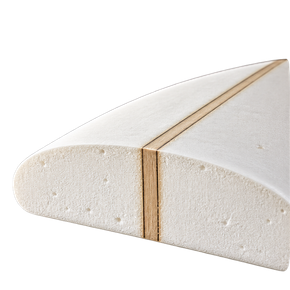
A proven foam technology tested over decades. PU is affordable, versatile, easy to use and easy to repair. It delivers the reliable, traditional construction used by many of the world’s best surfers.
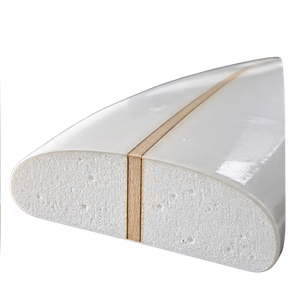
A traditional polyurethane blank glassed with Epoxy resin. EPoly provides a lighter, stronger and more durable construction while maintaining its flex characteristics longer than traditional PE.
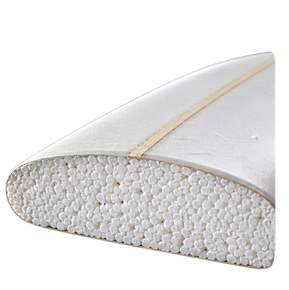
Expanded Polystyrene foam glassed with Epoxy resin. EPS construction is lighter, livelier and stronger than traditional PU/PE, while providing increased paddle power and responsive flex.
How stringers and reinforcement systems influence strength, flex and rebound.
Removing the traditional center stringer allows the board to work more freely in torsion, creating a more dynamic and responsive flex pattern.
Rusty’s stringerless construction uses Carbon/Kevlar reinforcement along the rails to control torsional flex and generate spring and rebound through turns.
A lightweight carbon-fiber construction designed to deliver high strength, rapid response and an energetic flex-and-rebound characteristic.
Nano-carbon reinforcement engineered to strengthen key areas while controlling flex and maintaining a lightweight, responsive feel.
Design features that influence water flow and the way your board turns.
Channels are shaped into the bottom of the board as an alternative bottom design. Rusty uses deep channels alongside other bottom contours such as single and double concaves.
Asymmetrical boards use different designs on each side of the board. Rusty has used different tail shapes and rail configurations to create different characteristics between frontside and backhand surfing.
Explore how tail outlines influence lift, hold and release. These are general tendencies: tail width, rocker, rails, bottom contours and fins also shape the ride.
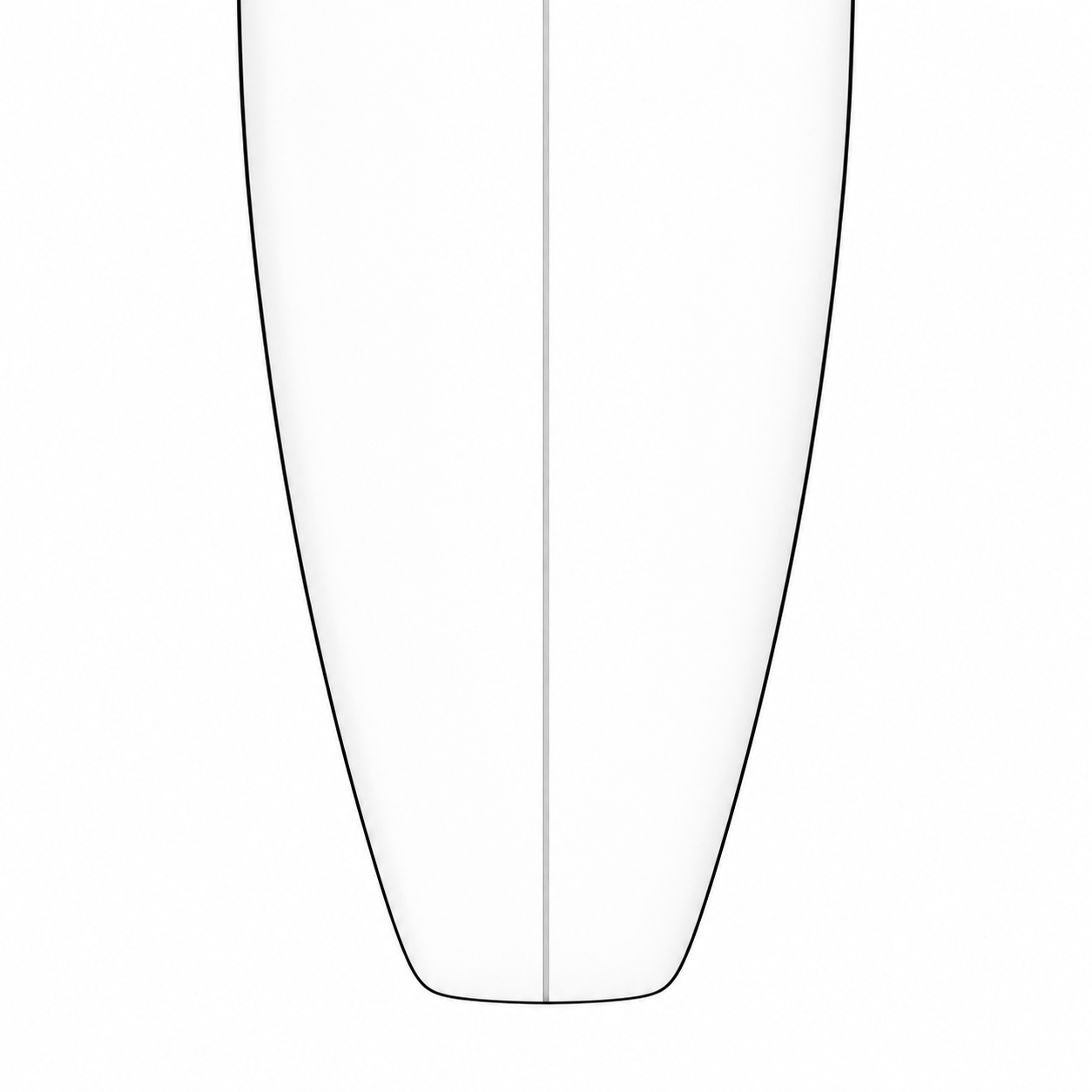
A versatile everyday outline with a broad tail block and softened corners. It combines lift and forward drive with a smooth transition through turns and a clean release.
Best suited to
Everyday waves and smaller surf.
Considerations
Compared with a narrower tail, the extra area can feel less settled as waves become larger and more powerful.
Board types
Performance shortboards, everyday hybrids and some mid-lengths.
Rusty examples
Yes Thanks; Egg Not.
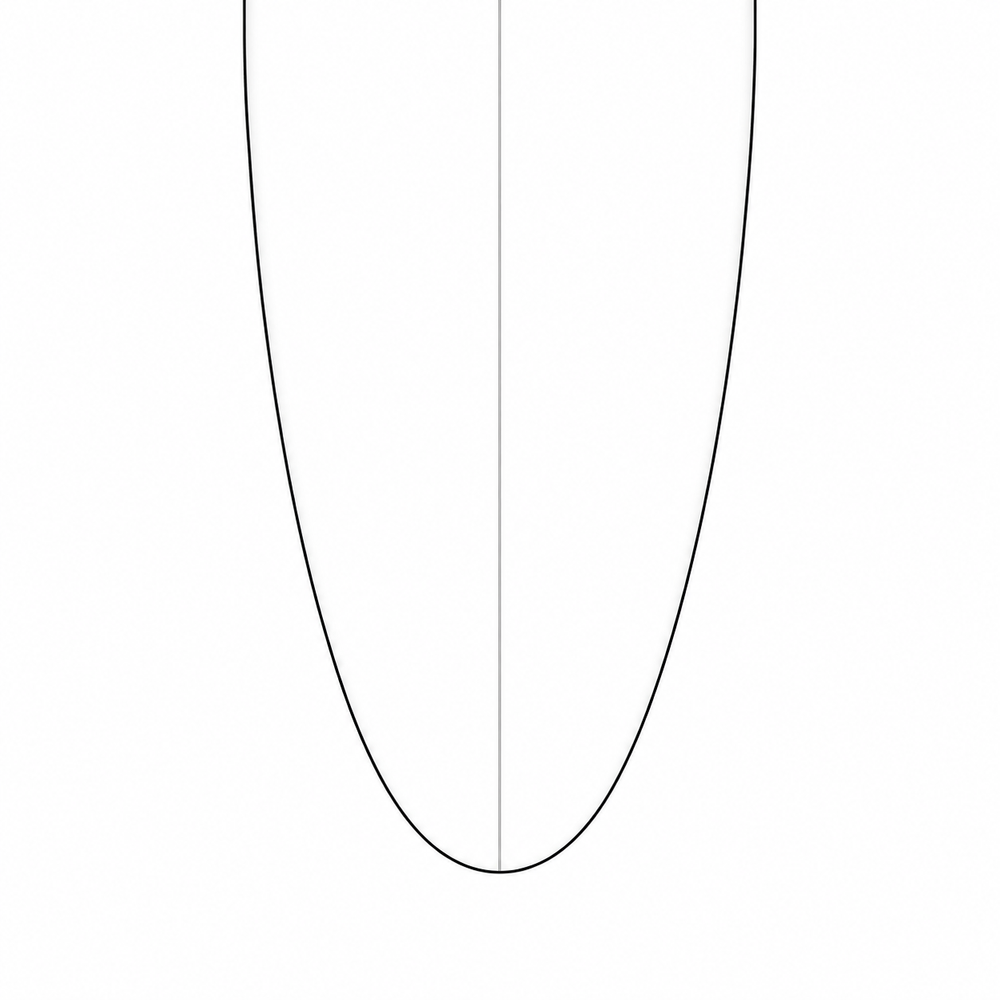
A continuous curved outline keeps the tail engaged through a turn and gives a smooth, controlled feel. It supports flowing arcs, quick rail changes and confident direction changes in quality surf.
Best suited to
Clean, quality waves and more powerful surf.
Considerations
Usually offers less planing lift than a similarly sized squash, so weak waves may need more input.
Board types
Performance shortboards, all-round boards and mid-lengths.
Rusty examples
Underdog; Low Rider. Enough Said uses an elliptical thumb variation.
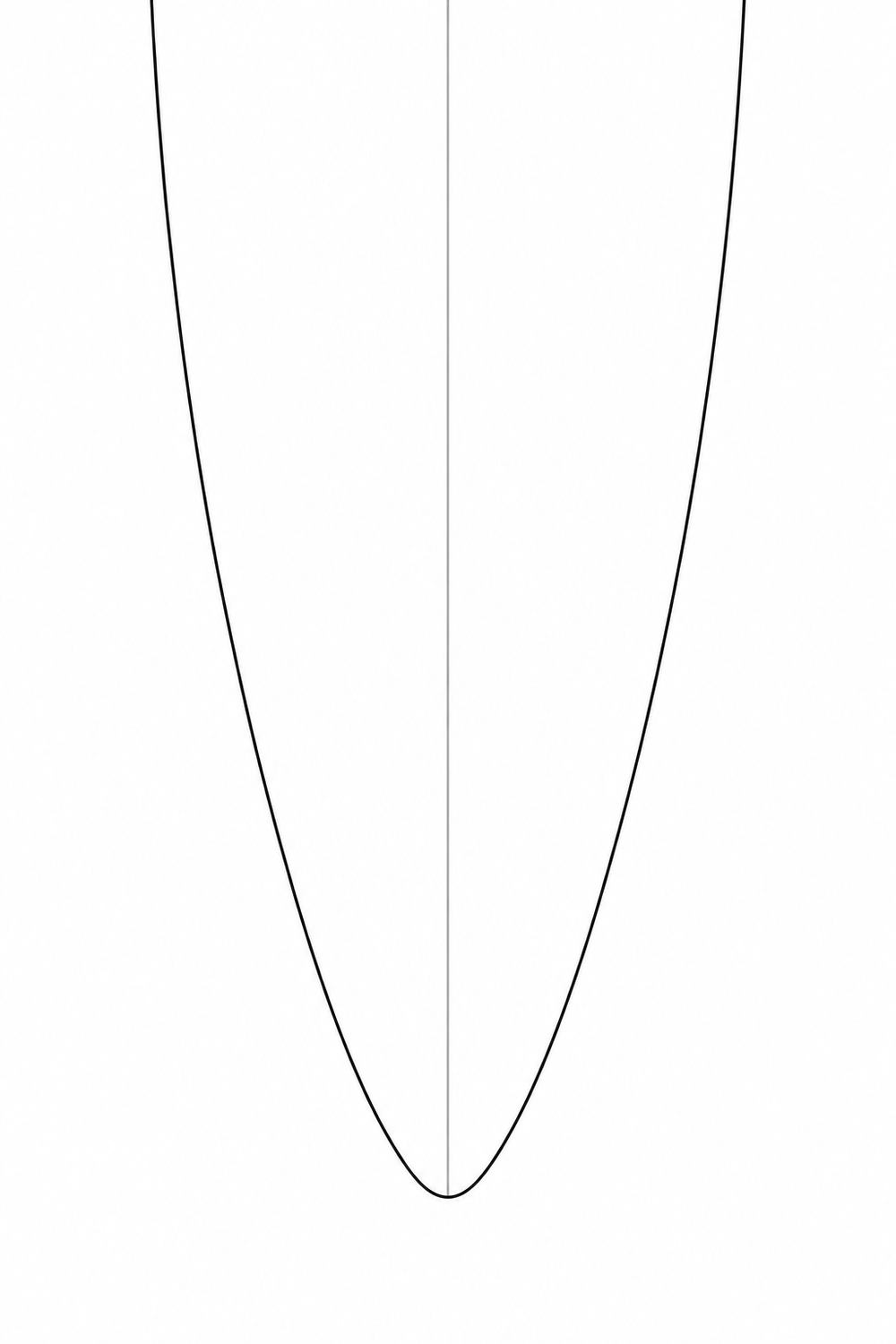
A pulled-in outline ending in a softly rounded point. It retains more tail area than a true pin while favouring grip, drawn-out turns and control in steep or powerful waves.
Best suited to
Steep faces, hollow waves and step-up conditions.
Considerations
Less planing area can make it less lively when the waves are small and weak.
Board types
Step-ups, performance boards for solid surf and some mid-lengths.
Rusty examples
Blackbird uses a rounded pintail.
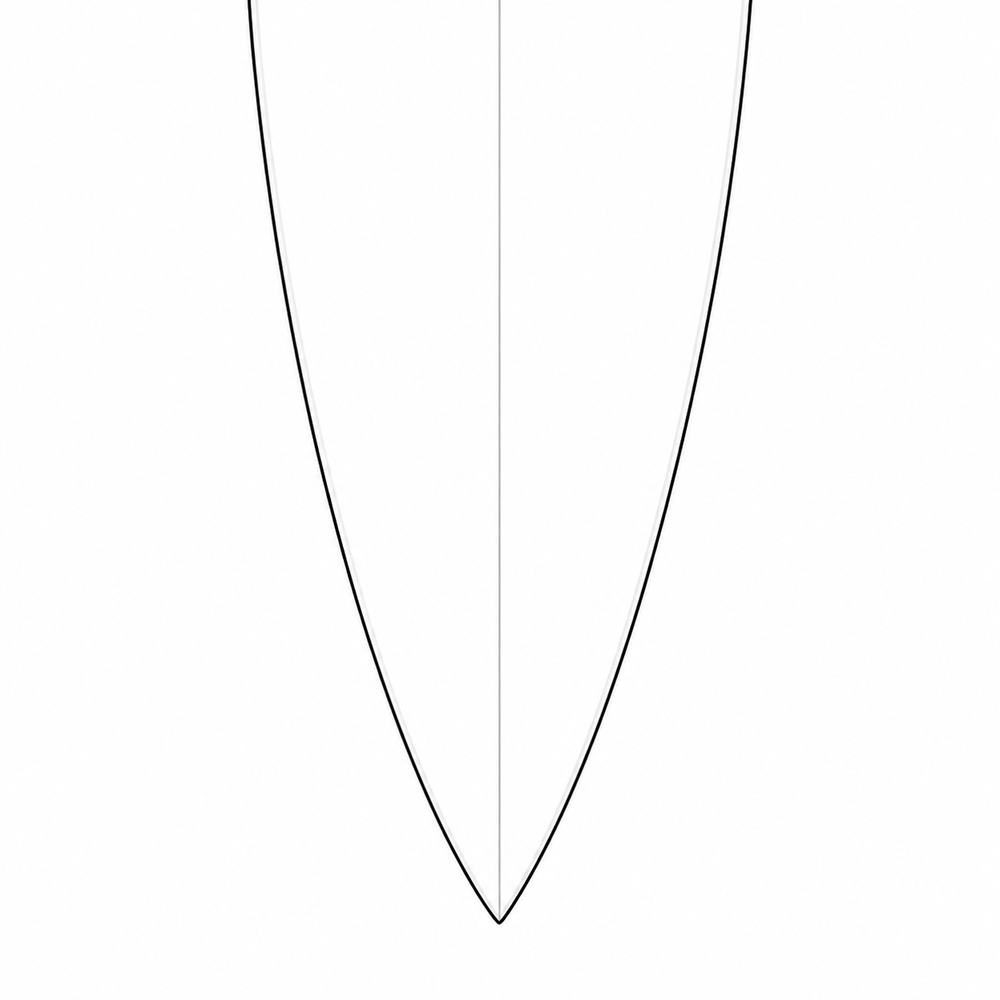
A narrow tail that tapers to a pronounced point, prioritising hold and directional control at high speed. Its reduced surface area suits powerful waves where staying connected to the face matters most.
Best suited to
Large, fast and powerful surf.
Considerations
The small tail area generates less lift and easy speed in weaker waves.
Board types
Big-wave guns and specialised boards for serious surf.
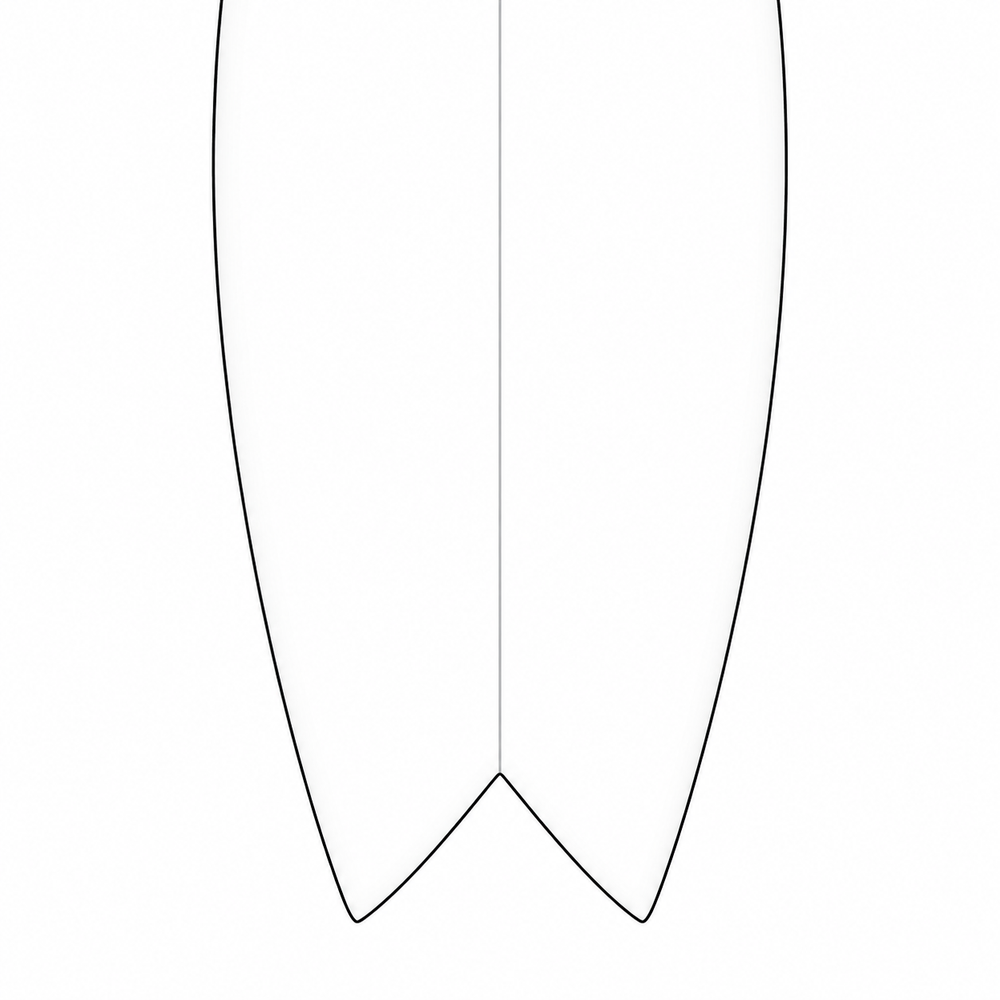
Two tail tips combine the planing area of a wider outline with distinct points of grip. The split helps the board bite into the face and turn sharply while keeping useful lift under the back foot.
Best suited to
Curved or hollow faces; wider fish variations also suit smaller waves.
Considerations
Can provide less forward projection than a comparable squash. The width and depth of the split influence the feel.
Board types
Fish, twin fins, quads and performance hybrids.
Rusty examples
Barking Spider uses a shallow swallowtail; Big Cat combines a swallow with double wings.
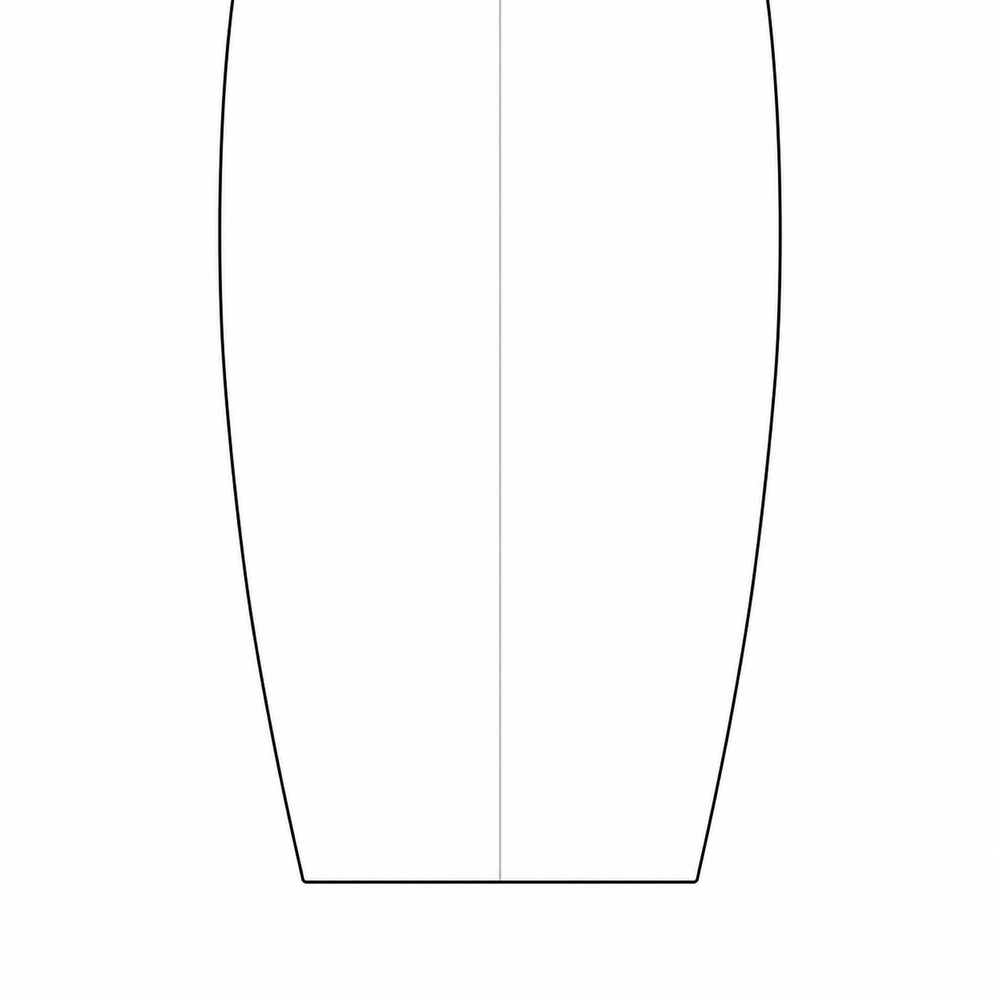
A broad, flat tail block preserves plenty of surface area for lift and drive. Defined corners create a clear pivot point, giving the board a positive push out of turns.
Best suited to
Waves where lift, speed and forward drive are priorities.
Considerations
A wide block may feel harder to settle at high speed and slower to roll from rail to rail.
Board types
Wide small-wave boards, some performance shortboards and square-tail longboards.
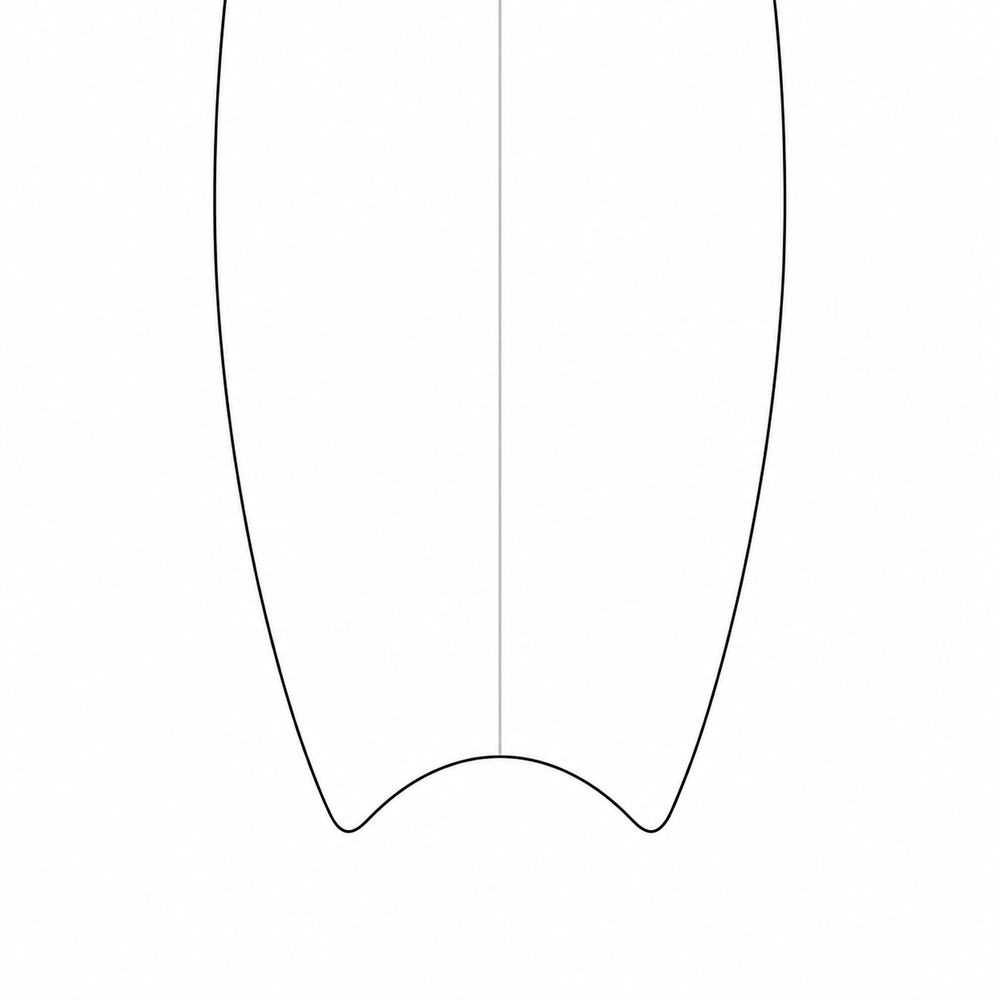
A curved cut-out between two tail tips adds grip to a wider outline. It favours connected turns and a composed, predictable feel when the wave offers a clean line.
Best suited to
Clean, lined-up waves and quality surf.
Considerations
The engaged feel can offer less free tail release.
Board types
Alternative shapes, fish-inspired boards and custom designs.
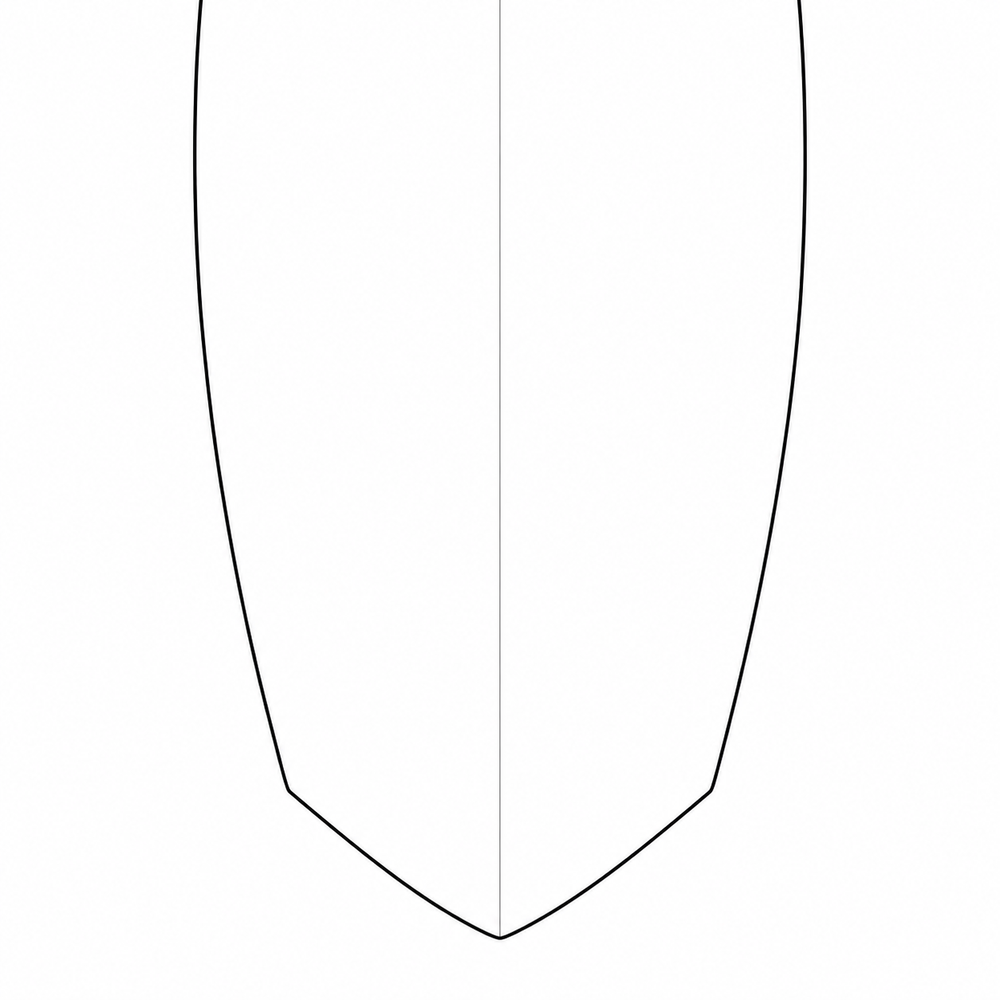
Angled corners shorten the rail line while keeping useful width through the tail. The central point adds grip, and the earlier pivot can make a fuller board feel more compact through a turn.
Best suited to
Fuller boards designed to feel shorter and turn easily.
Considerations
Its distinctive pivot feels different from familiar squash or round outlines and may not suit every surfing style.
Board types
Grovelers, compact performance shortboards and selected mid-lengths.
Rusty examples
Neil uses a shallow diamond tail.
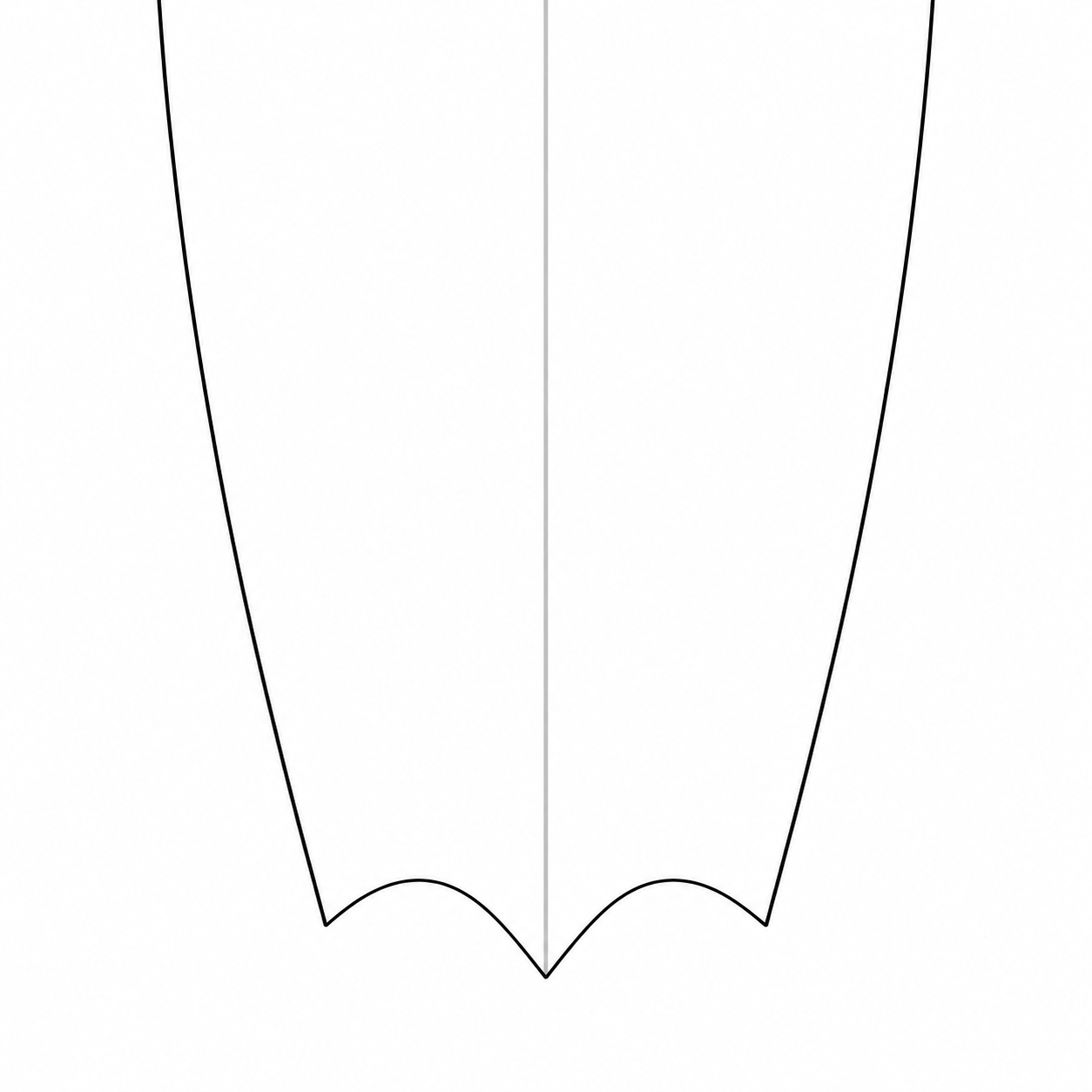
A wide tail with two curved cut-outs and a central point. The retained area contributes lift, while the three points add bite and a positive, responsive pivot.
Best suited to
Small, punchy waves and compact performance designs.
Considerations
The extra bite can feel more locked-in than a freer-releasing tail.
Board types
Small-wave performance boards and specialised alternative shapes.
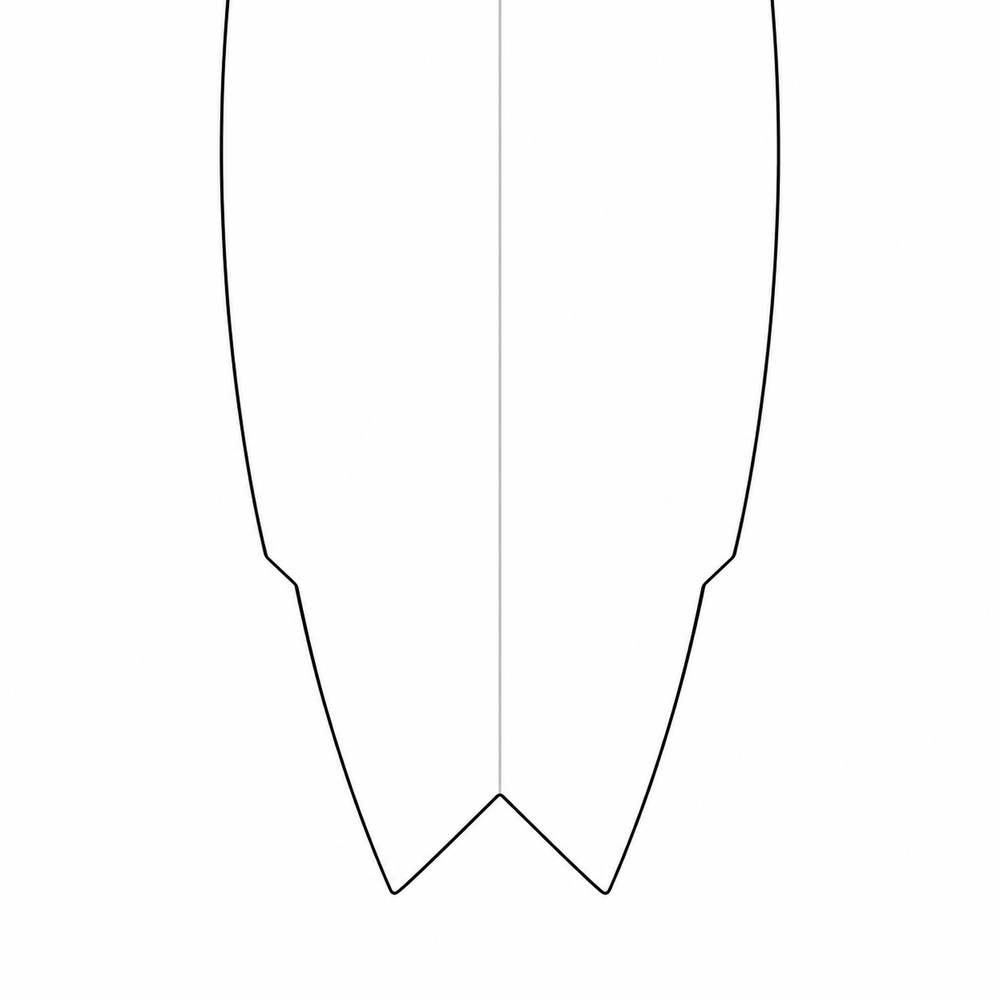
A step or bump in the rail narrows the outline before the tail, preserving width further forward while creating a distinct turning point. It can be combined with a swallow, round or other tail shape.
Best suited to
Small, playful waves on wider fish, groveler and hybrid designs.
Considerations
The feel in larger surf depends on the final tail shape and width; a wide, playful design may offer less control than a dedicated step-up.
Board types
Fish, grovelers, hybrids and selected performance boards.
Rusty examples
Dwart uses a double-winged rounded tail; Big Cat uses a double-wing swallow.
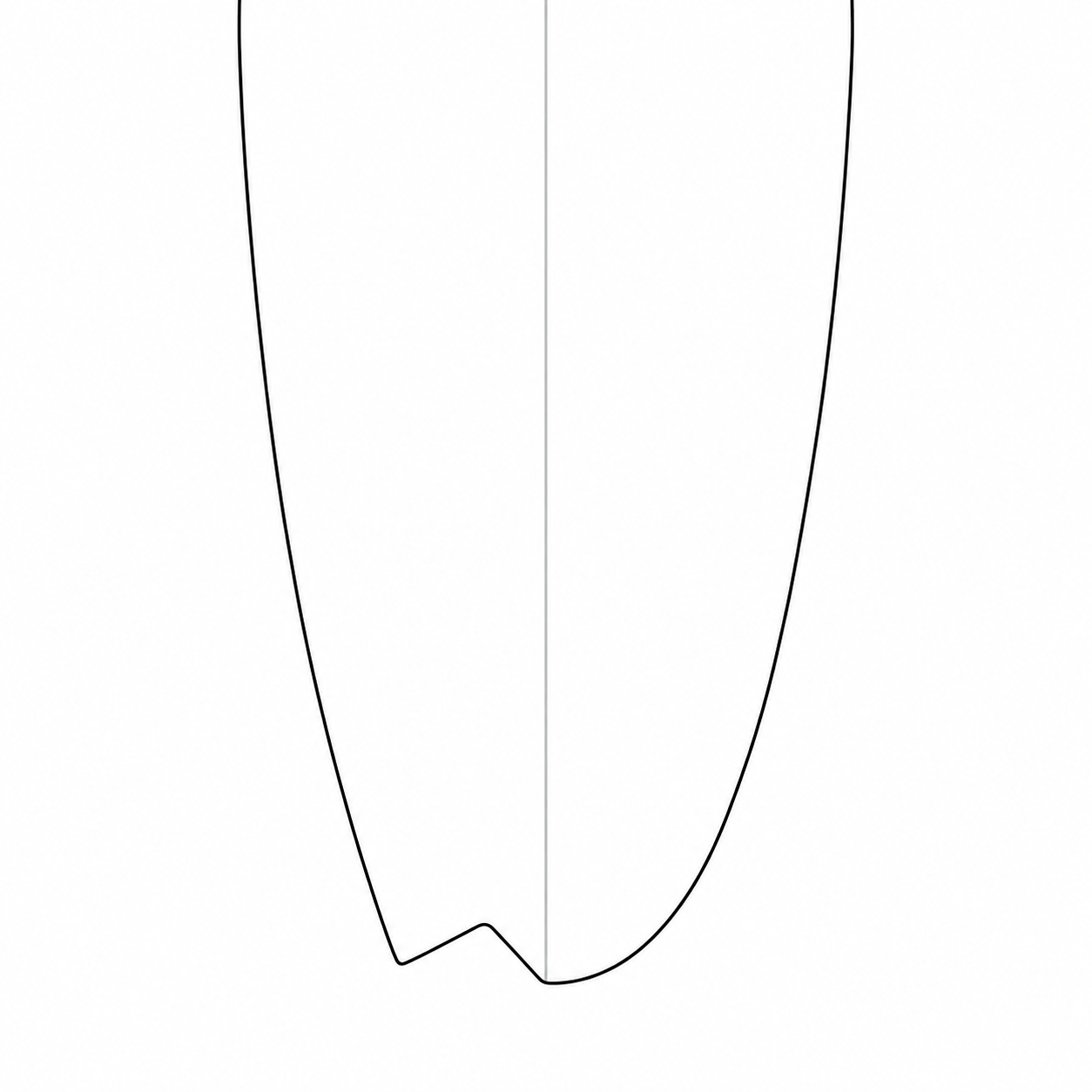
Different outlines on the two sides of the tail tune the board around the way you surf on your toes and heels. The design can balance frontside and backhand turns to suit an individual rider.
Best suited to
Custom designs matched to a surfer’s stance, technique and preferences.
Considerations
A specialised setup needs to be chosen for the intended rider and may feel unfamiliar to someone else.
Board types
Custom asymmetric shortboards, fish and alternative shapes.
Choose the setup that matches your style, conditions and model.
One larger fin, usually designed for long, down-the-line waves and flowing from rail to rail.
Two fins positioned closer to the rails, creating a quicker, looser and faster-turning board.
Three fins create more drive and stability, with the ability to redirect quickly.
Four fins with no center fin provide significantly more speed without sacrificing much control.
Five fin boxes give the surfer the option to ride the board as either a Thruster or a Quad.
One larger center fin with two smaller side fins, combining smooth flow with added grip and control.
Find your ideal volume. This chart is a general guide. The ideal volume depends on your body weight, height, skill level, surf frequency and the type of waves you surf.
Swipe to explore the table
| Weight (lbs) | Weight (kg) | Multiple | Advanced | Advanced / Intermediate +5% | Intermediate +25% | Intermediate / Beginner +50% | Beginner +100% |
|---|---|---|---|---|---|---|---|
| 80 | 36.2 | 0.44 | 15.95 | 16.74 | 19.93 | 23.92 | 31.89 |
| 85 | 38.5 | 0.43 | 16.58 | 17.40 | 20.72 | 24.36 | 33.15 |
| 90 | 40.8 | 0.42 | 17.14 | 18.00 | 21.43 | 25.71 | 34.28 |
| 95 | 43.1 | 0.41 | 17.66 | 18.55 | 22.08 | 26.50 | 35.33 |
| 100 | 45.4 | 0.40 | 18.14 | 19.05 | 22.58 | 27.21 | 36.28 |
| 110 | 49.9 | 0.39 | 19.46 | 20.43 | 24.32 | 29.18 | 38.91 |
| 120 | 54.4 | 0.38 | 20.68 | 21.71 | 25.85 | 31.02 | 41.36 |
| 130 | 59.0 | 0.36 | 21.22 | 22.28 | 26.53 | 31.84 | 42.45 |
| 140 | 63.5 | 0.35 | 22.22 | 23.33 | 27.78 | 33.33 | 44.44 |
| 145 | 65.8 | 0.35 | 23.02 | 24.17 | 28.77 | 34.52 | 46.03 |
| 150 | 68.0 | 0.35 | 23.81 | 25.00 | 29.76 | 35.71 | 47.62 |
| 155 | 70.3 | 0.35 | 24.60 | 25.83 | 30.75 | 36.90 | 49.20 |
| 160 | 72.6 | 0.35 | 25.40 | 26.67 | 31.75 | 38.09 | 50.79 |
| 165 | 74.8 | 0.35 | 26.19 | 27.50 | 32.74 | 39.28 | 52.38 |
| 170 | 77.1 | 0.35 | 26.98 | 28.33 | 33.73 | 40.47 | 53.97 |
| 175 | 79.4 | 0.35 | 27.78 | 29.17 | 34.72 | 41.67 | 55.55 |
| 180 | 81.6 | 0.35 | 28.57 | 30.00 | 35.71 | 42.86 | 57.14 |
| 185 | 83.9 | 0.35 | 29.36 | 30.83 | 36.71 | 44.05 | 58.73 |
| 190 | 86.2 | 0.35 | 30.16 | 31.67 | 37.70 | 45.24 | 60.32 |
| 195 | 88.4 | 0.35 | 30.95 | 32.50 | 38.69 | 46.43 | 61.90 |
| 200 | 90.7 | 0.35 | 31.75 | 33.33 | 39.68 | 47.62 | 63.49 |
| 210 | 95.2 | 0.35 | 33.33 | 35.00 | 41.67 | 50.00 | 66.66 |
| 220 | 99.8 | 0.36 | 35.92 | 37.71 | 44.90 | 53.88 | 71.83 |
| 230 | 104.3 | 0.37 | 38.59 | 40.52 | 48.24 | 57.89 | 77.19 |
| 240 | 108.8 | 0.38 | 41.36 | 43.43 | 51.70 | 62.04 | 82.72 |